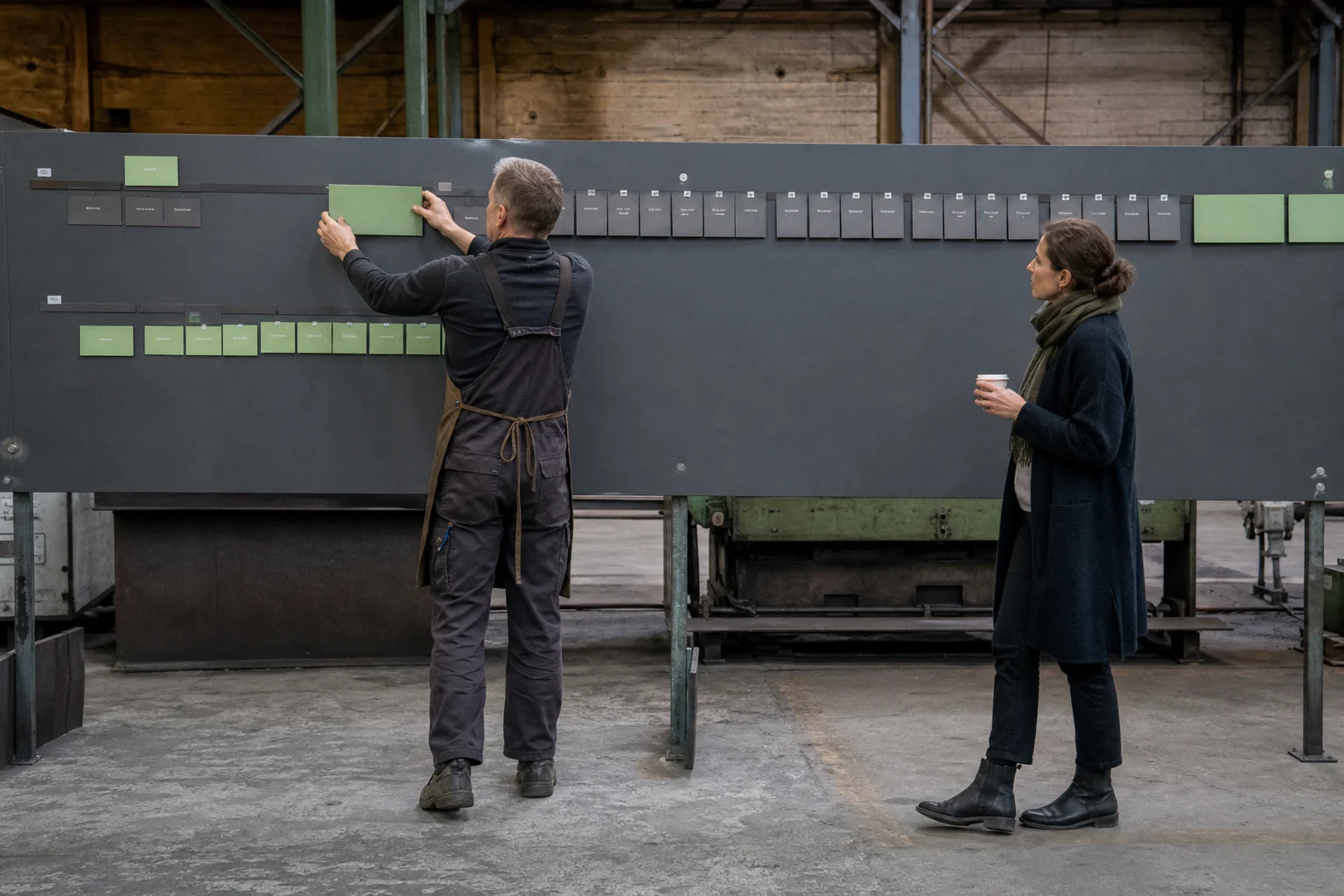
Serious digital support first assesses the current setup, chooses one priority outcome, then aligns tools, data, responsibilities, training and follow-up. The goal is not more subscriptions. It is the smallest system the team can actually use.
Belgian benchmark, 2025. The Belgian FPS Economy reports that 46.1% of SMEs use enterprise software. It also lists cost, lack of time, knowledge and skilled staff among the obstacles to digitalisation. Adopting a tool and making change work are different jobs. See the official software figures and the Belgian SME digitalisation overview.
Assess what already exists, then choose between automation, focused website fixes and acquisition. These four checks provide a concrete starting point without creating another unnecessary project.
How should you assess the current website?
Ten concrete criteria before deciding to rebuild.
Which task should you automate first?
Choose a frequent, stable and measurable workflow.
Should you rebuild the website or fix it?
Separate structural problems from repairable defects.
SEO or Google Ads: where should the budget go?
Balance immediate demand against durable visibility.
You have a website. Maybe even a nice website. You have an Instagram page. You have created a Google Business Profile. Someone convinced you to sign up for an email marketing tool. You may have even invested in online advertising. And despite all that, nothing has really changed.
The phone doesn't ring any more than before. Customers do not come from the site. You have not opened the email-marketing tool you pay for each month in three weeks. The Instagram page is neglected. The website attracts little attention and generates no contact requests.
If this situation speaks to you, you are not alone. Some small businesses accumulate tools without being able to connect their cost to a measured outcome. It's not because digital doesn't work. That's because no one told them how to connect these tools together so that they serve a clear purpose.
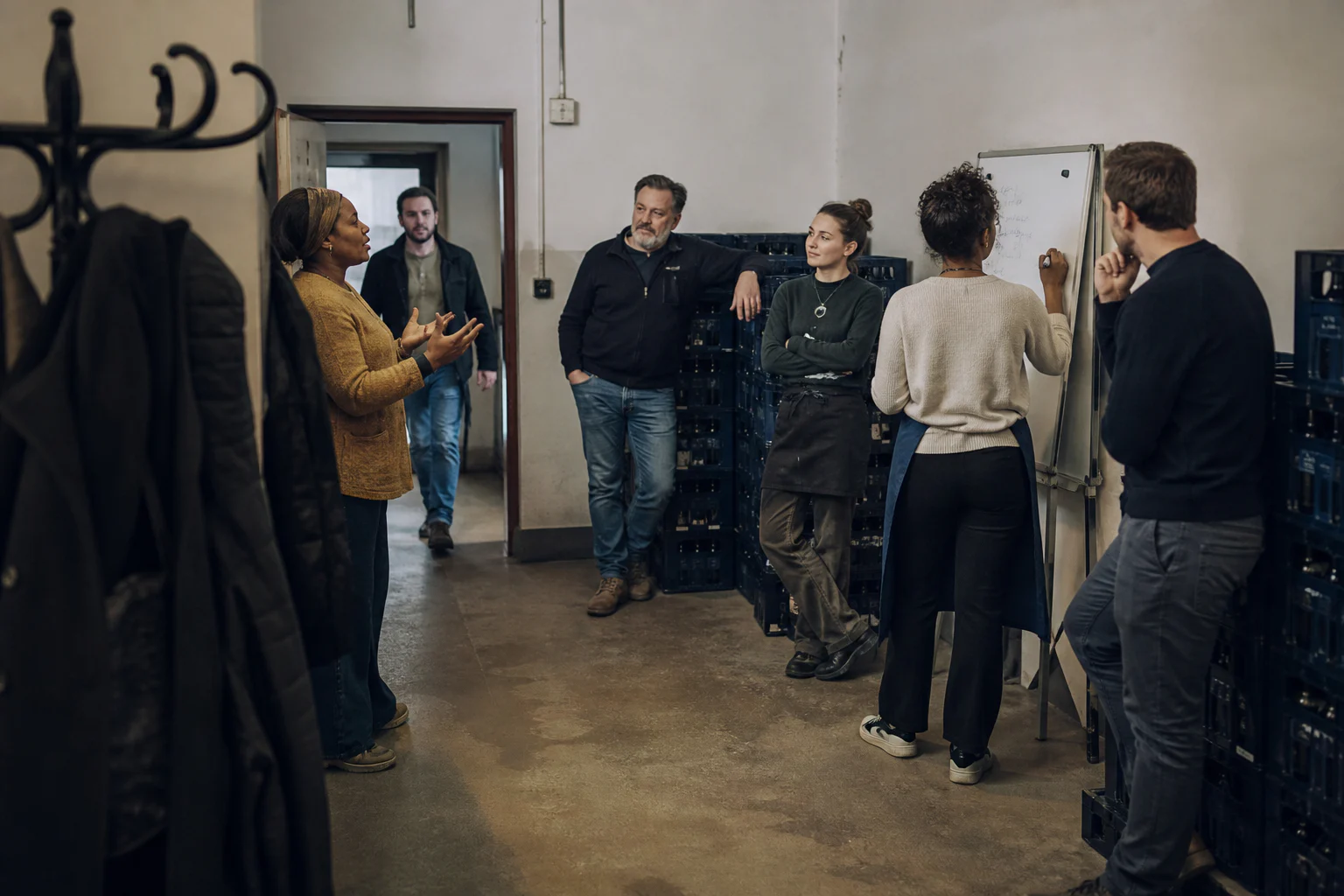
Illustration of a framing workshop for a Belgian small business.
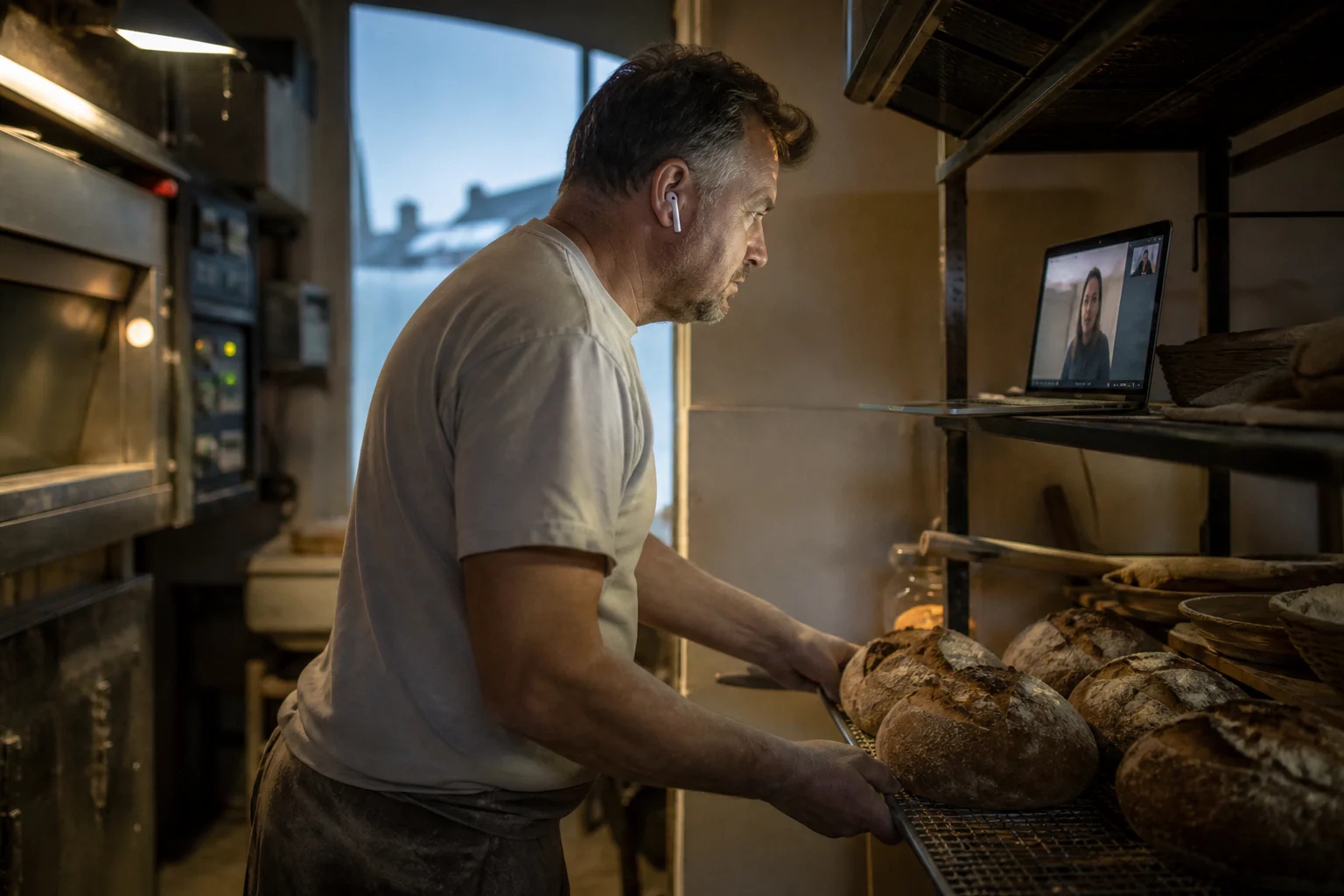
We adapt: in person or by video.
When an entrepreneur decides to “go digital,” this is what typically happens. He searches on Google “how to get more customers”. He comes across an article that says you need a website. He hires someone to build a website. The site is pretty, but no one visits it. So he is looking for “how to get traffic”. He comes across an article that talks about online advertising. He spends 500 euros on advertising. People click but don't stay. So he says that the problem comes from social networks. He starts posting on Instagram. After several posts, the audience barely changes and no customers come through this channel.
The problem is not the site, nor the advertising, nor Instagram. The problem is lack of strategy. Each tool has been taken in isolation, without overall thought about what it should accomplish, for whom, and how it connects to others.
It's like opening a restaurant by first buying an oven, then chairs, then plates, without ever asking the question: “What type of cuisine do I want to serve? To whom? In which neighbourhood?” The equipment does not make the restaurant. The vision makes the restaurant. The equipment follows.
Before, we sold a site to everyone. Now, we sell a chatbot, an AI agent or a miracle workflow to everyone. Same mistake, just with newer packaging. If your processes are unclear, if no one knows who responds to what, if your data is messy and if your tools don't talk to each other, AI will not fix that. It will only accelerate the mess.
This is why we insist so much on framing. At Hebora, we do not choose an AI engine before having understood the business, the channel, the level of risk, the technical environment and the expected result. Otherwise we do demo. Not advice.
Digital support is not a service that you buy like you buy a website or a logo. It's a relationship. It's someone who takes the time to understand your business, your customers, your strengths, your constraints, and who builds with you a plan adapted to your reality.
Concretely, real support takes place in five phases:
Phase 1: Understand
Before we touch anything, we sit down and talk. No scripted answers. A real conversation. What exactly do you do? Who are your customers? How do they find you today? What works well in your business? What frustrates you? How much time per week can you devote to digital? What is your actual budget?
These questions seem simple, but the answers change everything. A restaurant that lives mainly from its regulars in the neighbourhood does not need the same strategy as a consultant who seeks customers throughout Belgium. A craftsman whose activity varies greatly depending on the season does not have the same needs as a business that wants to sell online.
Most providers skip this step. They come with a ready-made solution. Their solution. And offer it to everyone. “You need a website.” “You need publicity.” “You must be on social media.” Maybe. Maybe not. We can't know without first understanding your situation.
Phase 2: Advise
Once we understand your situation, we will give you honest advice. Sometimes that advice is: “You don't need a new website. Your current site is correct, the problem lies elsewhere.” Or: “An Instagram account will be of no use to your business. Focus on Google.” Or even: “You don't need us. What you are doing is working well, keep it up.”
A good advisor does not seek to sell as many services as possible. It seeks to identify the minimum number of actions whose effect can be measured. For a restaurateur, it may be right to optimize his Google profile and set up a review system. For a craftsman, it might be a one-page site and a WhatsApp Business number. For a business, it might be an Instagram catalogue before considering an e-commerce site.
Advice also means knowing how to say no. No, you don't need this feature. No, this tool is not suitable for your size. No, now is not the time to invest in this. Good support documents rejected options, their cost and the reason for the choice.
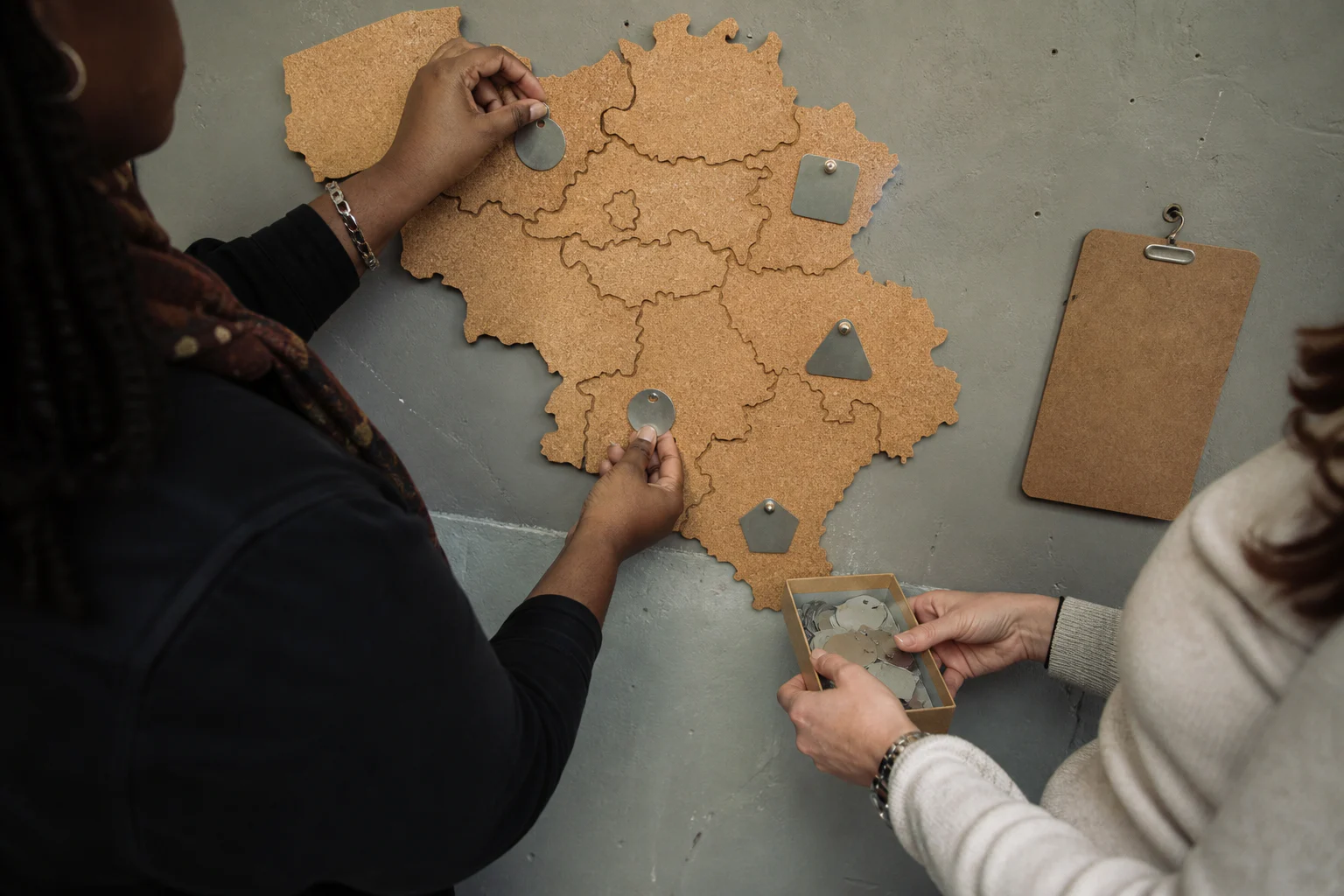
We first decide on priorities. The tool comes later.
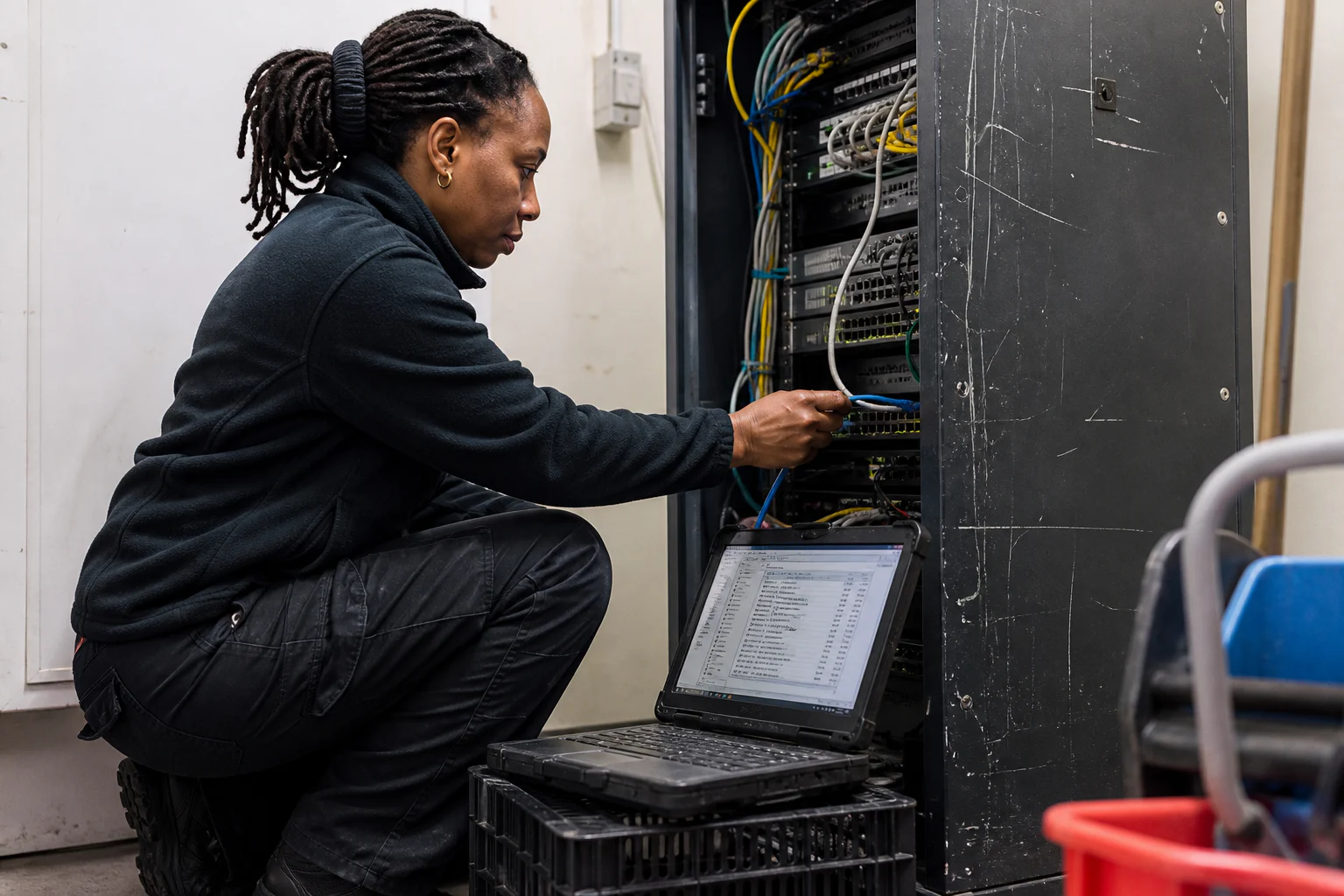
Digital that works also depends on a clean environment.
Phase 3: Set up
Once the plan is defined, we take action. But not in “we do everything and we’ll send you the bill” mode. We do it with you, explaining each step. Why we do this. How it works. What is it for?
The objective is not to make you dependent on a service provider. It’s about making you independent. If tomorrow you want to change service provider or manage everything alone, you must be able to do so. The tools are yours. The accounts are in your name. The passwords are with you. Nothing is held hostage.
Deploying an AI assistant or automation is never just a software purchase. You have to think about accounts, access, keys, permissions, sensitive data, logs, tests, human validation, and connections to your business tools. This is where many small businesses fail because they were sold a “tool” when they needed to manage a small system.
Our role is also this: to define what must remain internal, what can go to an external supplier, which engine to choose for what use, and how to connect all of this without breaking your habits or exposing your customers. SEO, GEO, customer support, automation: it all needs to tell the same story, not live in six different corners of your company.
Phase 4: Train
The most powerful tool in the world is useless if no one knows how to use it. Each implementation is accompanied by training. Not a 50-page manual that no one will read, but a concrete demonstration, adapted to your level.
How to update your site. How to respond to Google reviews. How to post effectively on Instagram. How to read the statistics to know what works. How to manage online orders. Each gesture is shown, practised, and documented in a simple file that you keep.
If your team isn't comfortable with technology, that's okay. That's just the starting point. We adapt the training to each person’s level. A restaurateur who has never used Instagram does not need the same support as a young hairdresser who has already mastered social networks.
Phase 5: Monitor and adjust
The first weeks after installation are the most critical. This is where questions arise, problems arise, doubts arise. “I don’t know how to do this any more.” “A customer left me a negative review, what should I do?” “My site doesn't display well on my daughter's phone.”
Post-delivery support is defined in the quote: duration, contact channel, covered fixes and response terms. You know exactly what is included.
And after a few months, we take stock. What worked? What went wrong? Should we adjust the plan? Maybe the advertising doesn't work but Google works very well. We reallocate the budget. Maybe Instagram works better than expected. We invest more time into it. Support is a living process, not a fixed project.
These examples explain a method. They are neither client testimonials nor performance figures:
A salon that is hard to reach may have a good-looking website but a hidden phone number and an incomplete Google profile. The useful work is to make calling obvious, complete the profile and simplify booking.
A caterer advertising too broadly may pay to reach people outside the delivery area. Framing narrows the area, clarifies the catalogue and measures orders genuinely attributable to each channel.
A tradesperson relying on word of mouth may remain invisible to people searching online. A complete listing, a simple website and an authentic review request after each job make the business verifiable. No review count or full calendar is promised.
Hebora is not a web agency that sells sites. It is not an advertising agency that sells campaigns. It is not a generalist freelancer offering everything to everyone. Hebora is a digital consulting partner for small businesses throughout Belgium.
What this means in concrete terms:
- We always start by listening. No sales pitch, no ready-made package. A conversation to understand your reality.
- We recommend the minimum necessary. If three actions are enough, we are not offering you ten. Your budget and time are limited. We respect them.
- We explain everything in clear language. No jargon, no incomprehensible technical terms. If you don't understand what we're offering you, that's our problem, not yours.
- We make you independent. The goal is that after a few months, you will be able to manage your online presence without us. The support period stated in the quote covers questions without making you dependent.
- We measure the results. Not with abstract statistics that no one understands, but with simple numbers: how many new customers this month? How many calls from Google? How many online orders? If the results are not there, we adjust. If something doesn't work, we stop it.
Hebora digital support is aimed at small businesses throughout Belgium which:
- Have between 1 and 15 employees
- Know they need to “do something with the Internet” but don’t know where to start
- Have already invested in digital tools without seeing results
- Do not have a dedicated marketing or communications person
- Want to understand what they are doing, not just blindly delegate
- Want a reliable point of contact with follow-up clearly defined in the quote
Whether you are a restaurateur, artisan, trader, consultant, therapist, or whether you practice any other profession. If you are a small structure in Belgium and digital seems complicated to you, we are here to simplify.
Still unsure? If several of these situations sound familiar, an assessment can clarify priorities, spending to avoid and the measures to track:
- You have a website, but it doesn't generate any calls or contact requests.
- You pay for a subscription to a tool (emailing, CRM, advertising) that you haven't used for weeks.
- When someone asks you “Are you on the internet?”, you answer “Yes, but…” with a grimace.
- Your Google profile has few recent reviews or no longer reflects the business accurately.
- Your direct competitor appears before you on Google even though you are better than him.
- You have spent money on online advertising without being able to measure what it brought in.
- You don't have anyone on your team who takes care of digital, and you're the one who does everything "when you have time" (i.e. never).
If several points match your situation, it deserves a clear assessment. The assessment selects relevant actions and how to measure them without presuming the outcome.
Not sure what you need?
This is precisely the starting point. We ask the right questions, we analyze your situation, and we tell you honestly where to start. Zero jargon, zero commitment.
Request a diagnosis