

Every business, regardless of size, does repetitive things. A craftsman who answers the same questions by email every day. A restaurateur who manages his reservations by telephone between two services. A consultant who recreates each quote in a Word document. A trader updating his stock in an Excel spreadsheet.
These tasks are necessary, but they don't make your business grow. They don't build customer loyalty, they don't make you better at your job. They eat up valuable time that you could spend doing what really matters: serving your customers, developing your skills, seeking new markets.
Measure before you automate. Note repetitive tasks, their exceptions and manual restarts for a week. This statement provides a real basis for deciding whether an automation is worth its cost.

A dashboard centralizes requests and automates monitoring.
Not everything can be automated, and not everything should be. Human relationships, creativity, important decisions, that remains your domain. But here's what AI and automation handle very well:
Answer frequently asked questions
The same questions often come up: schedules, prices, availability, operation. An assistant can prepare a response based on your validated information and escalate unusual or sensitive cases to a person.
Make appointments
No more going back and forth by email to find a slot. An automated system shows your availability in real time, the customer books themselves, and everyone receives confirmation and an automatic reminder. It synchronizes with your Google calendar or email.
Create and send quotes
For services with standardized prices, a smart form collects customer information, calculates the price based on your rates, and generates a professional PDF quote in seconds. All you have to do is validate it before sending.
Contact customers at the right time
A quote sent 5 days ago with no response? A loyal customer who hasn't returned in 3 months? Automation sends personalized reminders at the right time, without you having to think about it. Not robotic messages, but messages adapted to each situation.
Invoice and track payments
The preparation of invoices, their transmission, reconciliation and reminders can be linked to your accounting tool. The rules, exceptions and validations remain defined with your accountant and the people responsible.
Since January 1, 2026, invoices that fall within the scope of the Belgian B2B obligation must be electronic and structured; a PDF alone is usually not enough. The federal portal indicates that software connected to the Peppol network is necessary to send, receive and process these invoices.
Hebora can map the current flow, check transmission and reception points, prepare technical connections, organize tests and keep human validation on exceptions. The legal and fiscal scope is confirmed with your accountant.
Check the obligation in the official e-bill FAQ, Then have my processes audited.
Get an overview of your business
Instead of compiling your figures by hand each month, an automatic dashboard brings together your data in real time: turnover, number of customers, satisfaction. You open, you read, you make your decisions.
Framed AI workflows. A system that works for you
A good AI workflow goes far beyond a simple assistant. It is a system capable of performing repetitive tasks with clear rules: analysing data, preparing responses, generating reports, monitoring changes and triggering the right actions at the right time.
Concretely, you can monitor your competitors, analyze trends in your market, generate monitoring summaries and automatically chain together tasks that would normally require several tools and several people.
Suppia. Your AI assistant under an agreed service level
Suppia is an AI assistant that you set up on your website or via WhatsApp. He knows your business like the back of his hand: your services, your prices, your hours. He responds to customers like a member of your team would, with the right information, the right tone, and the ability to make appointments or understand the customer's needs.
Unlike classic chatbots that follow rigid scripts and don't understand anything, Suppia understands the meaning of the conversation and adapts. He knows when he can answer alone and when he should hand over to you.
Custom tools
Each company has its own working habits. For OhMiam, we have developed a complete online ordering system integrated with WhatsApp. For other clients, we have created automatic stock management tools, tailor-made reservation systems, or online quote platforms.
The Hebora approach is not to sell you a ready-made tool. It's about understanding the way you work and building exactly what you need.
Hebora does not default to one supplier. Depending on the case, we can connect a public, private or hybrid AI model. The right choice balances quality, cost, latency, confidentiality and compliance with your business rules.
Multilingual customer support, appointment scheduling, lead qualification or automated monitoring do not necessarily require the same engine. Some workflows need strict boundaries. Others prioritise speed or require a more isolated environment. We choose against those constraints instead of forcing the latest tool into every project.
Automation that affects your customers, your calendar or your invoicing does not live in a vacuum. You need a clean environment: accounts, API keys, permissions, logs, backups, escalation rules, human validation, and clear separation between test and production. Otherwise you don't have a system. You have a bet.
Concretely, we can take care of the hosting, the connection to WhatsApp, messaging, your calendar, your CRM or your invoicing tool, then define who has the right to do what. The AI does not decide on a refund, an exceptional quote or a sensitive response by itself. It prepares and records the work; a person retains control when required.
The right topic is not “making a chatbot”. The right topic is to remove friction in your real workflows: qualifying requests, creating quotes, appointment reminders, tracking payments, responding to FAQs, following up with prospects, sorting emails, generating reports or preparing internal tasks.
If a process is not clear, we first review it. Automating a confusing process only accelerates the confusion.
An AI assistant or automated workflow does not invent the right information. It retrieves that information from a source. If your site is vague, if your FAQs are old, if your services are not described properly, if your hours change without being updated, then your automation will reproduce that uncertainty at speed, leaving your team to correct the mistakes.
This is why we always connect automation to your real knowledge base: service pages, FAQs, internal procedures, qualification scripts and product data. Schema.org structured data describes published content; Files like ai-context.json or llms.txt are only kept here as experimental formats for consumers who choose to read them. Google does not indicate any such special optimization for its AI functions.

The real subject: what source of truth, what rules, what escalation.
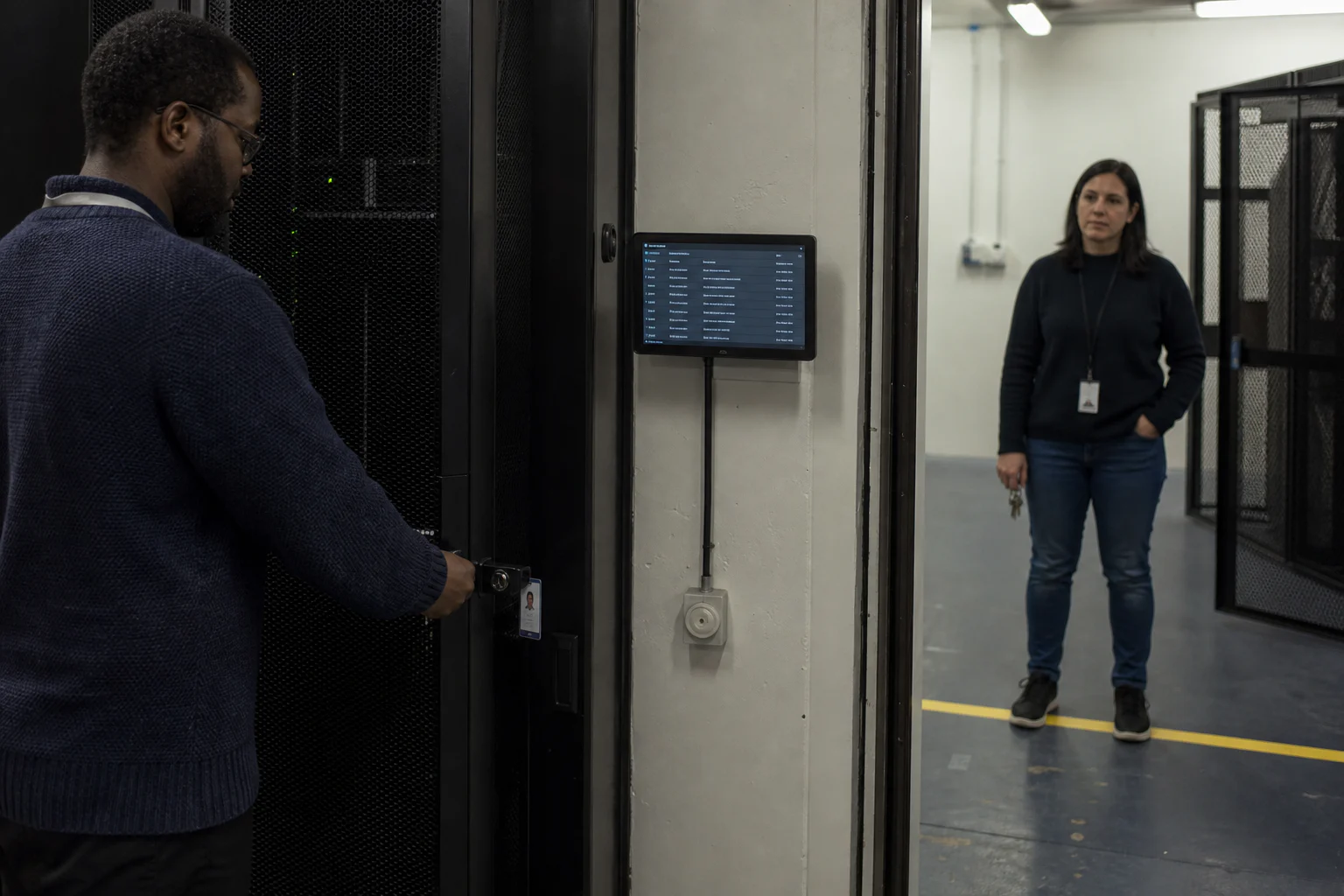
A clean workflow relies on clean content, not black magic.
The needs are not the same depending on the profession, but the quick wins are often very clear when we look at daily life:
- artisan : qualification of requests, prior sorting of emergencies and non-urgent requests, quotes, customer reminders, reminder of unpaid debts;
- health office : sorting requests, making appointments, reminders, answers to frequently asked questions, redirection to humans;
- trade : stock questions, orders, collection, delivery, basket reminder, WhatsApp support;
- restaurant : reservations, group requests, allergens, menu, confirmation, cancellation tracking;
- service companies : lead qualification, call preparation, report generation, email synthesis and sales follow-up.
In other words: we don't sell "AI". We remove micro-frictions that eat up your time and attention every day.

We support each client in setting up their automation.
There are hundreds of automation tools on the market. The real problem is not finding a tool, it's finding the right tool for your situation. And often the best solution is a mix of existing tools and custom development.
Our 4-step method:
- We observe your daily life. We spend time with you to understand how you work. What tasks take time? Which ones cause errors? Which ones annoy you? What tools are involved? We map your business processes before talking about technology.
- We identify quick wins. We are not trying to automate everything at once. We identify the 2-3 things that will immediately save you the most time. The 80/20 rule: a little effort for a big result.
- We set up and test. We configure the tools, we test them, we choose the right AI engine, we connect them together, we develop what is tailor-made. We define the environment, the permissions, the logs, then we test in real conditions.
- We train you and we remain available. A tool you don't know how to use is a useless tool. We show you how everything works, we document, and we remain available to adjust and develop the solution.
No long-term contract. No hidden fees. No oversized solution. Just what you need, configured for your business.
Automation is no longer reserved for large companies. An AI assistant like Suppia is designed to be accessible to small organizations. An automated appointment booking system is often free (online booking tool). Even custom tools remain affordable when they are properly sized.
The starting price is published: 900 € setup, then 200 € per month for a framed assistant. What still matters most is the time you get back. If the assistant truly reduces repetitive work without creating errors or rework, the benefit becomes measurable.
If you've never automated anything, here are the first 3 steps:
- List your repetitive tasks. For a week, write down every task you do more than once. Same email sent to 3 customers? Note. Appointment reminder by SMS? Note. Manual update of the schedule? Note.
- Estimate the time spent. For each repetitive task, estimate the time you spend on it per week. You will probably be surprised at the total.
- Contact us for a diagnosis. We look at your list together, identify quick wins, and offer you a concrete action plan. Free, no obligation.
Need support?
Hebora advises you before selling. Personalized diagnosis, tailor-made strategy, measurable results.
Chat with Hebora